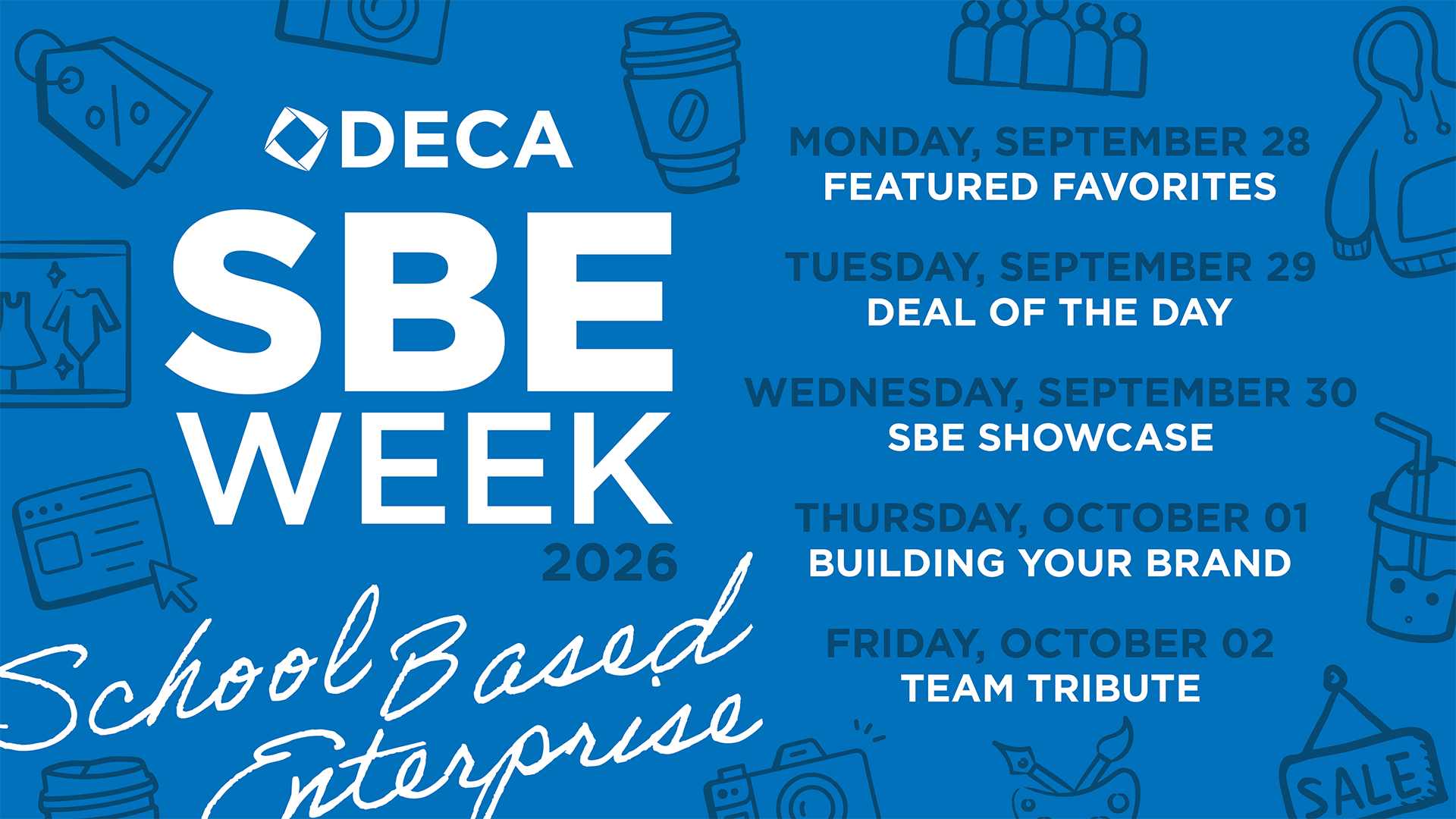
As thousands of school-based enterprises (SBE) celebrate DECA SBE Week, September 28 to October 2, this week is a tremendous opportunity to share the impact that SBEs make in preparing a future-ready workforce.
An SBE is an entrepreneurial operation within a school setting that provides goods or services to meet market needs. SBEs are managed and operated by students as hands-on learning laboratories that connect learning to the workplace.
Seamless Integration of Curriculum Standards
In a high school, students enroll in a course focused on business, marketing or entrepreneurship, and then engage in a learning laboratory comprised of student workers and even student managers to operate a real business within the school.
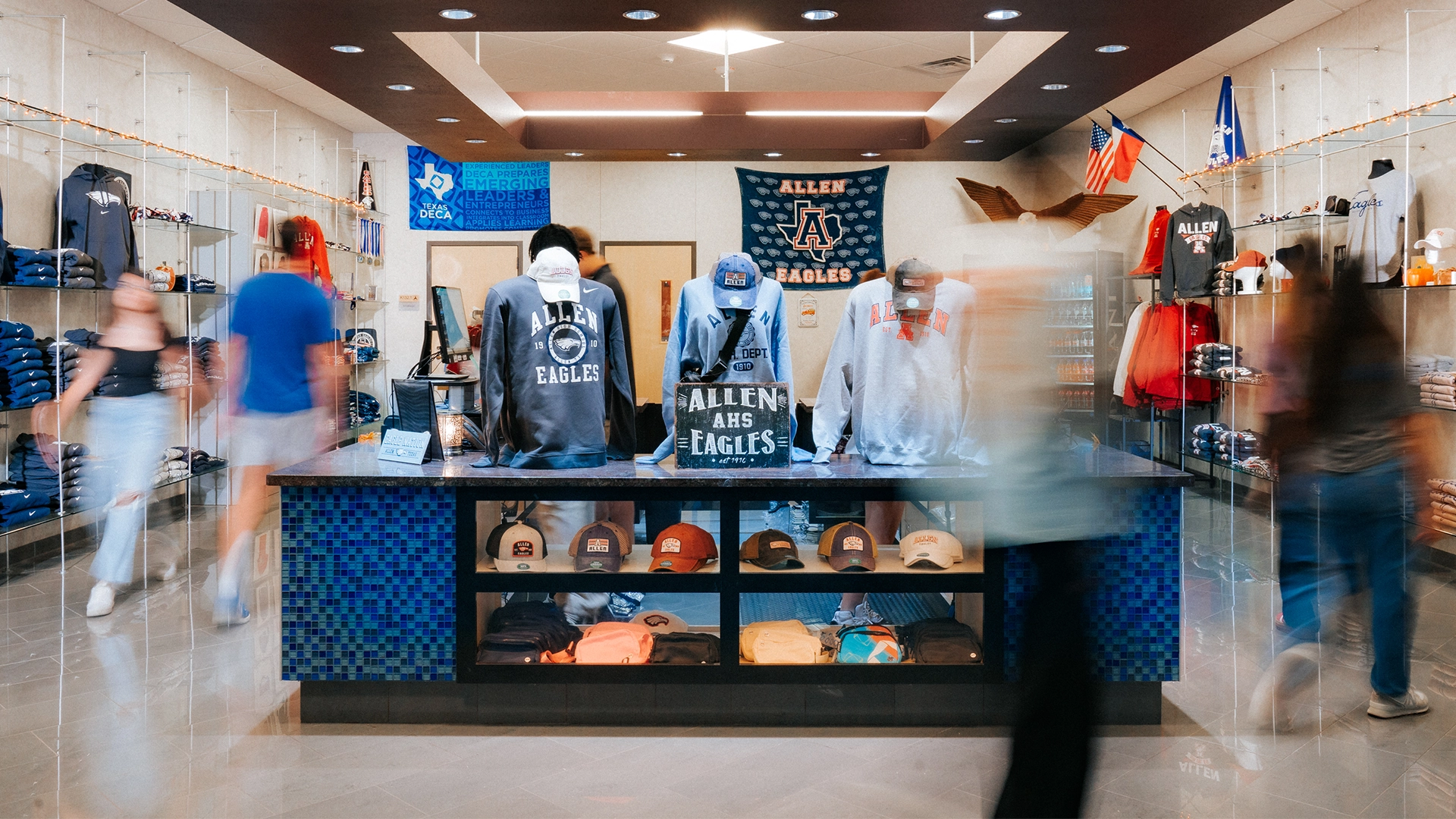
During the course, students learn concepts in instructional areas such as product/service management, market planning, operations, pricing, promotion, financial analysis, human resource management and more. They then apply their knowledge and skills while working in the SBE. Some schools operate coffee shops and cafes within their school, while others operate a retail store that carries school spirit wear, school supplies, food and beverage items and more. Some SBEs operate as a marketing agency providing services such as creative design, advertising and marketing research, or even as a real credit union.
For example, after a unit on promotion, the student employees create a year-long promotional plan for their SBE, or use marketing research concepts to gain customer insights when developing a new line of school spirit apparel. They also learn how to develop pricing strategies, create and track budgets, maintain appropriate financial records and more. The DECA teacher-advisor, who leads the classroom instruction and oversees the SBE, evaluates students on how well they demonstrate these curriculum standards.
Developing Essential Career Ready Practices
In addition to learning the marketing, business and entrepreneurial concepts, students are also learning, applying and demonstrating career-ready practices – the “soft skills” that employers are strongly seeking.
Advance CTE emphasizes 12 career-ready practices that represent the skills needed to succeed in the modern workplace, all of which can be embedded in the students’ learning through the SBE. These practices include: lead as a contributing and professional employee; think critically to make sense of problems and persevere in solving them; communicate clearly, effectively and with reason; use digital skills and technologies to enhance productivity and make data-informed decisions, among eight others.
These career-ready practices can’t be taught as concepts in a classroom alone; students must be in situations where they can apply the practices to develop and effectively demonstrate them. Through interacting with fellow student employees and customers in the SBE, students can practice their communication skills, for example. As students develop promotional campaigns for the SBE, they make data-informed decisions to determine the promotions and then use digital skills to create visuals for the campaign.
By the time a student reaches an employer, the goal is that the student has developed these career-ready practices, making them a stand-out candidate.
High-level, Engaging Work-based Learning
In recent years, work-based learning has become a popular method in career and technical education to connect classroom academic study with hands-on work experience in an authentic, real-world workplace or simulated environment. Through DECA’s SBE program, however, members have been participating in work-based learning for decades, and the SBE program has recently experienced exponential growth.
Work-based learning can include a variety of phases, but SBEs provide career experiences that go beyond exposure and exploration. Student members have roles and responsibilities within the real businesses operated within their school, and they usually conduct sales transactions daily.
Collectively, DECA’s 1,000 certified SBEs reported that they generate more than $35 million in gross sales annually. This translates to real-world learning, with the opportunity for profit and loss and a significant local economic impact.
Often, the profit generated from the SBEs is used to invest in its student members by funding additional career development opportunities, such as attending DECA’s educational conferences to participate in a career-based competitive events program. These experiences alone prepare students to dress professionally, travel in a business setting, engage in professional learning and experience different environments and cultures.
Certification Program: Evidence and Application of Learning
Nearly 1,000 school-based enterprises in DECA chapters annually demonstrate learning standards through a formal certification process to earn gold-level certification. To achieve certification, students document in a written business report how the SBE meets the identified standards. The students must explain with examples how the operations of their SBE meet the identified learning outcomes, which relate to curriculum standards.
Earning certification validates curriculum efficacy, provides credibility and strengthens the relevancy of the SBE as a valuable teaching tool, while also garnering international recognition. In addition, DECA offers an individual certification program to recognize members’ knowledge and understanding of business operations concepts within the chapter certification.
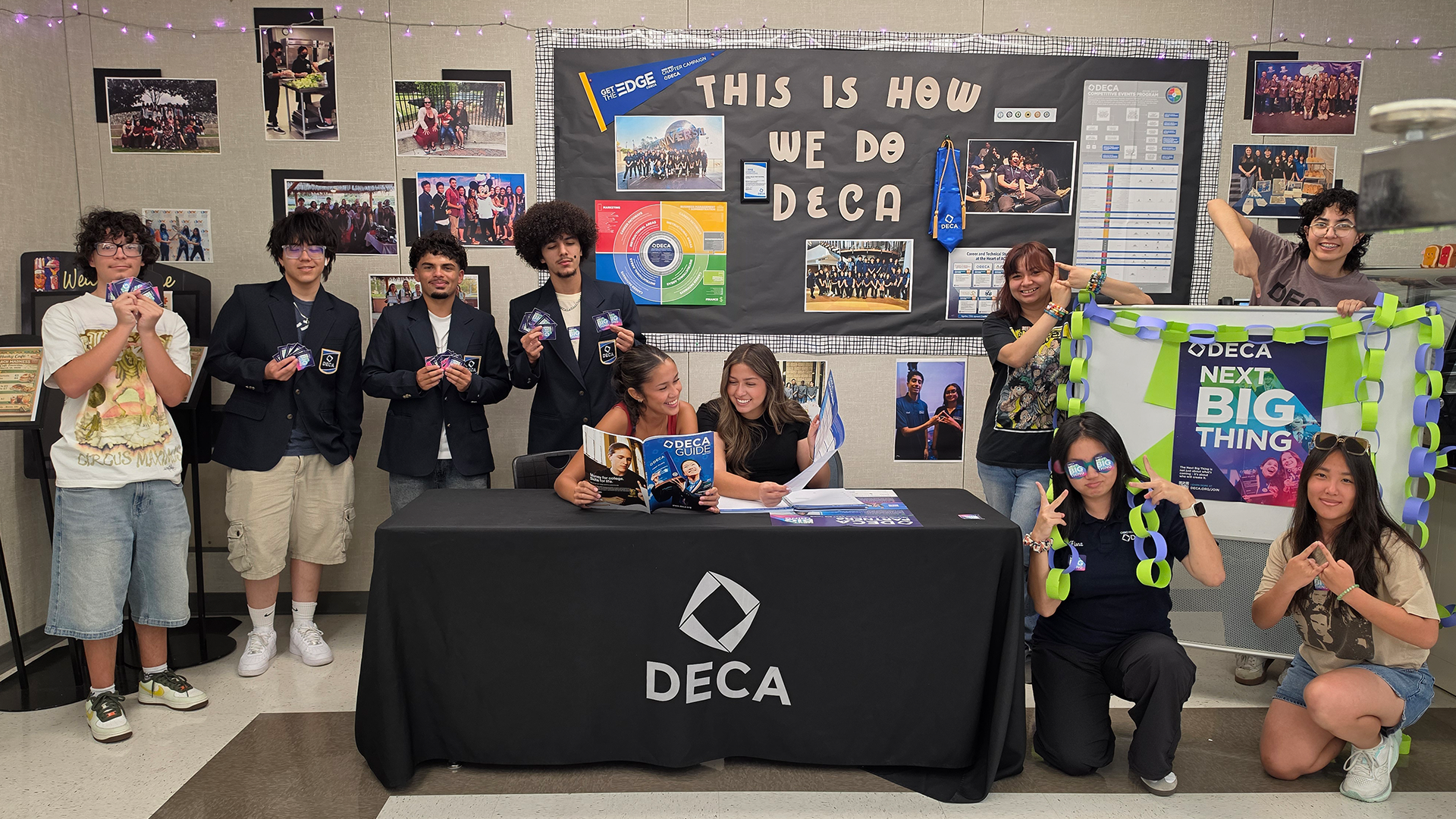
DECA’s SBE program contributes to developing a future-ready workforce equipped to meet the demands of employers seeking students who can demonstrate career-ready practices. This week, DECA chapters are encouraged to celebrate their SBE with a social media marketing campaign showcasing their SBE and its most popular products, marketing and promotion activities, its customers and its student staff.
This week is perfect to check out #DECASBEWeek and @decainc to see the photos and videos and learn more about SBEs.